Axolotls do it. Zebrafish do it. Why can’t we? Scientists studying nature’s master regenerators have uncovered a shared set of genes that may one day allow humans to regrow lost limbs.
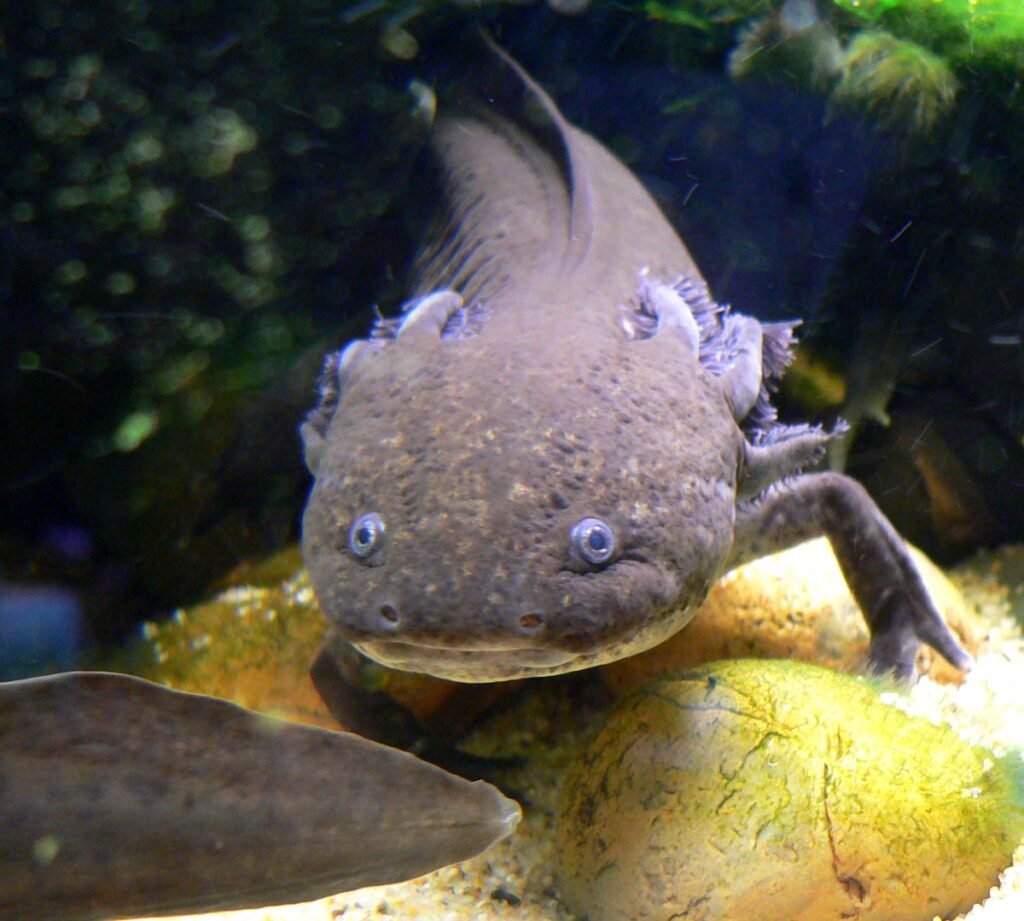
The axolotl, a Mexican salamander, can regenerate entire limbs, parts of its spinal cord, heart tissue, and even portions of its brain — all without scarring. Zebrafish can regrow fins and heart tissue. Mice can regenerate the tips of their toes.
Humans? We form scar tissue and move on.
The SP Gene Family
An international research team compared gene expression during regeneration across axolotls, zebrafish, and mice. They identified a family of genes called «SP genes» that activate within hours of injury in all three species.
In axolotls, these genes trigger a full regenerative program — growing a new limb identical to the lost one. In mice and humans, the same genes flicker on briefly, then get silenced, replaced by scar formation.
«These SP genes are the master conductors of regeneration. They’re present in humans — they just don’t stay active long enough,» said the lead researcher.
Can We Flip the Switch?
The crucial insight: humans have these genes. We just lost the ability to keep them turned on. The research suggests that if we can develop drugs or gene therapies that prolong SP gene activity after injury, we might unlock regenerative abilities we thought were lost in evolution.
Applications could include:
- Regrowing fingers and toes after amputation
- Healing spinal cord injuries without scar tissue
- Repairing heart muscle after a heart attack
- Treating severe burns with regenerated skin rather than grafts
From Salamanders to Humans
The first human applications are likely a decade or more away, but the discovery confirms what scientists have long suspected: the genetic blueprint for regeneration still exists within us. It just needs to be awakened.
Based on research published May 9, 2026.